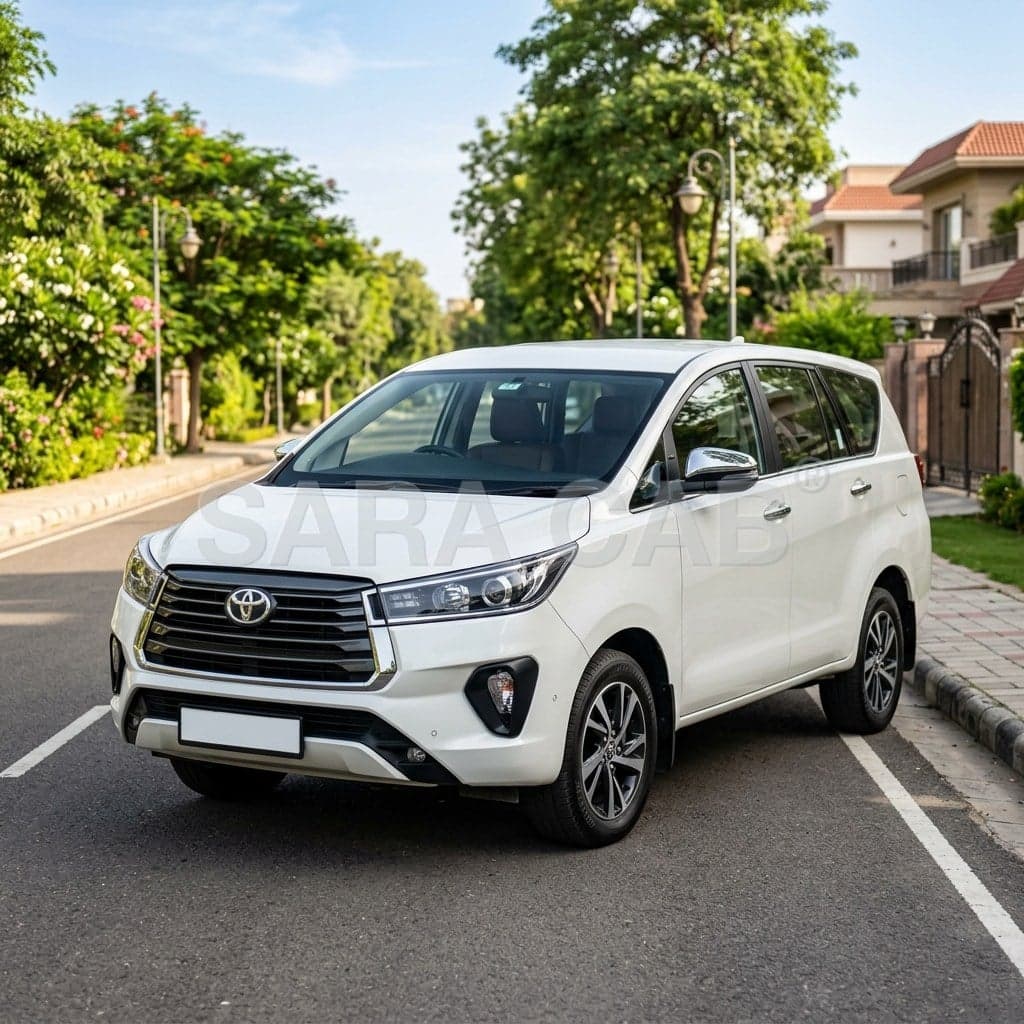

Sedan (Swift Dzire / Etios)
👥 3–4🧳 2 bags
Budget couple / small-family darshan day trips
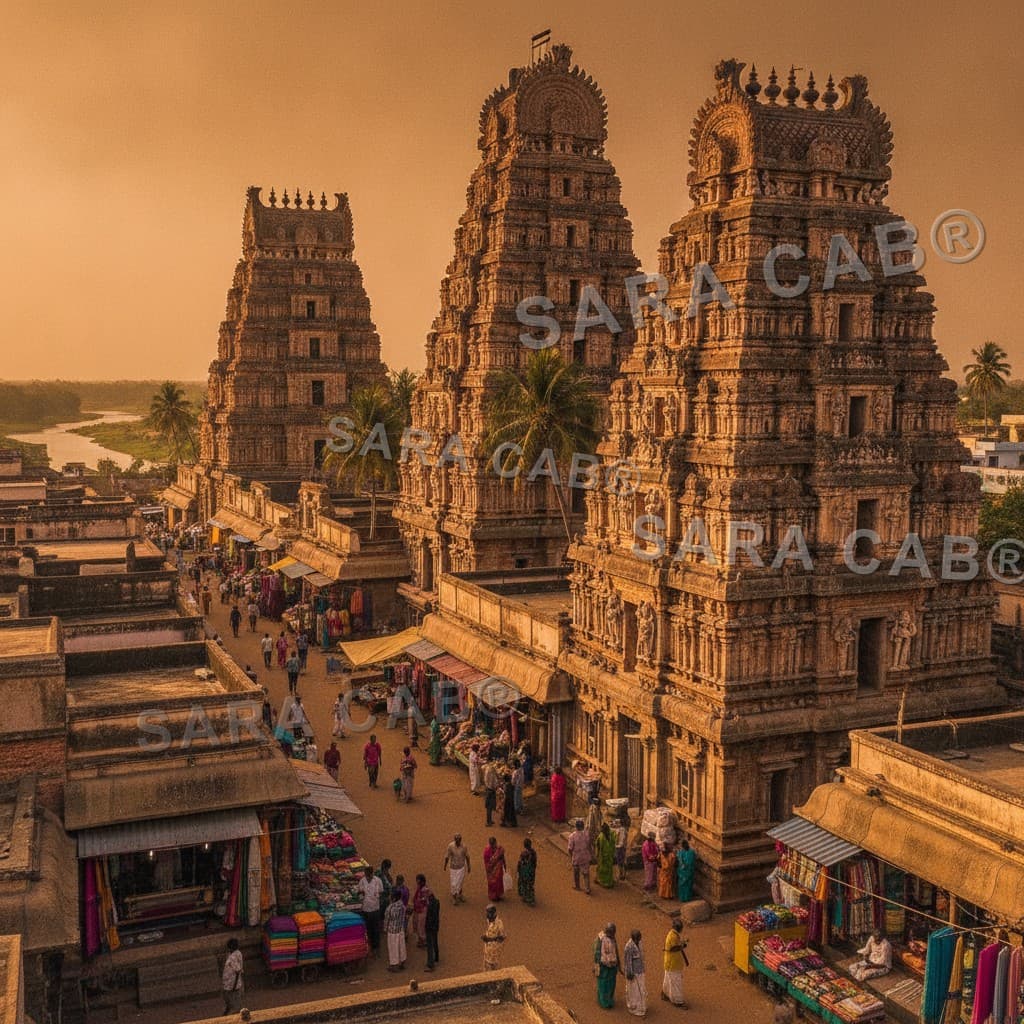
A weekend circuit of the 'city of a thousand temples' — Kanchipuram's great shrines plus Tiruttani, Sholinghur and Sriperumbudur — easy from Chennai.
Kanchipuram is one of the seven Mokshapuri (salvation-giving cities) of India and holds temples for both Shiva and Vishnu — the Kamakshi Amman shakti shrine, the towering Varadharaja Perumal, and the Ekambareswarar Earth-lingam among them. It is also the historic silk-weaving capital of the south.
The wider Thondai Nadu region adds the hill Murugan temple of Tiruttani, the Narasimha shrine of Sholinghur, and Sriperumbudur, birthplace of the Vaishnava acharya Ramanuja — a compact, temple-rich weekend within easy reach of Chennai.
The Kamakshi Amman Temple in Kanchipuram is one of the foremost shrines to the Goddess in South India, revered as a principal seat of Shakti. The deity Kamakshi is worshipped in a distinctive seated posture, and the temple is closely associated with the tradition of Sri Chakra worship and with the great teacher Adi Shankara. Unusually for the temple city, Kanchipuram's other Shiva temples are said to lack separate goddess shrines because the Devi is concentrated here, making Kamakshi the presiding mother of the city.
Darshan centres on the serene seated form of the goddess and the revered Sri Chakra before her, and worship here is regarded as especially auspicious for devotees of the Devi. The temple is largely level and accessible for elderly pilgrims. The Tamil festival months and the annual float and car festivals bring vibrant celebrations. The cooler months are most comfortable. Modest dress is customary. Set in the heart of the temple city, it is easily combined with Kanchipuram's many other shrines and its renowned silk-weaving quarters.
The Varadaraja Perumal Temple in Kanchipuram is one of the most revered Vishnu shrines and a celebrated Divya Desam, sung by the Tamil saint-poets. The presiding deity, Varadaraja, is worshipped as the bestower of boons, traditionally believed to have appeared from a sacrificial fire. The temple is admired for its magnificent Vijayanagara-era architecture, including an ornate pillared hall with remarkable sculptures and a sacred image kept within the temple tank that is brought out for worship only at long intervals, drawing vast crowds when it is displayed.
Darshan brings devotees to the boon-granting Perumal, set on a small elevation reached by a flight of steps within the complex. The temple is expansive, and while much is accessible, the sanctum steps may challenge some elderly pilgrims. The Tamil festival months and the great Garuda procession are major occasions. The cooler months suit the visit. Modest dress is customary. As one of Kanchipuram's principal Vishnu temples, it pairs naturally with Kamakshi Amman and the city's other Divya Desams.
Ekambareswarar Temple is Kanchipuram's foremost Shiva shrine, honouring the lord as the element of Earth, and one of the great Pancha Bhoota temples. The presiding lingam is revered as the Prithvi Lingam, traditionally believed to be formed of earth, and a celebrated legend tells of the goddess worshipping Shiva beneath an ancient mango tree said to still stand within the complex. With its towering gopuram, vast courtyards and thousand-pillared hall, it is among the largest and most historically layered temples of the city.
Darshan draws pilgrims to the earth lingam and the venerable mango tree around which much devotion centres. The temple is expansive but largely level, making it broadly manageable for elderly visitors, though it involves considerable walking. The Panguni festival is a grand annual occasion. The cooler months are most pleasant. Modest dress is customary. As the principal Shiva temple of Kanchipuram, it forms a natural part of a tour that takes in Kamakshi Amman, Varadaraja Perumal and the city's many other shrines.
The Murugan temple at Tiruttani, on a hill in the Thondai Nadu region, is revered as one of the six sacred abodes of Lord Murugan. It is traditionally believed to be where the lord settled into calm and grace after his battles, and here he is worshipped in a serene, boon-granting aspect, often with his consorts. Its position within reach of both Chennai and the Tirupati region makes it a much-frequented shrine, and devotees favour it for beginning the new year and seeking peace and the fulfilment of vows.
The hilltop sanctum is reached by a long flight of steps, symbolising the days of the year, with vehicle access part of the way to ease the climb for the elderly. Darshan is generally smooth outside peak days. The New Year and the annual festival season draw large crowds. Modest dress is customary. The cooler months are pleasant for the ascent. Being close to both Kanchipuram and Tirupati, Tiruttani fits readily into a wider pilgrimage through the Thondai Nadu country.
Sholinghur, in the Thondai Nadu region, is celebrated for its twin hill shrines, the larger dedicated to Vishnu as Yoga Narasimha and a smaller neighbouring hill to Anjaneya, the deity Hanuman. Together they are traditionally revered as a place to seek relief from mental distress and afflictions, and the site is counted among the Divya Desams honoured by the Tamil saint-poets. The Narasimha form worshipped here in a meditative, yogic aspect gives the shrine its distinctive character and draws devotees seeking calm and healing.
Reaching the main sanctum involves a substantial climb of many steps up the hill, which is demanding and better suited to able-bodied pilgrims, while the Anjaneya shrine crowns the adjacent hill. Darshan rewards the ascent with commanding views. The cooler months are best for the climb. Modest dress is customary, and carrying water is advisable. The annual festival season draws devotees. Set within reach of Kanchipuram and Tiruttani, Sholinghur can be woven into a broader circuit of the region's shrines.
Sriperumbudur, on the road between Chennai and Kanchipuram, is revered as the birthplace of Ramanuja, the great teacher of the Vaishnava tradition. The temple here honours him, and the site holds deep significance for followers of the philosophy of qualified non-dualism that he propounded. Traditionally cherished as the place where this influential saint-philosopher entered the world, it draws devotees who come to pay homage to his memory and legacy, and the shrine is regarded as an important seat of Vaishnava heritage in the Thondai Nadu region.
Darshan focuses on the shrine to Ramanuja, and the visit has a reflective, devotional character centred on the teacher's life and teachings. The temple is largely level and accessible for elderly pilgrims. The annual observances connected with the saint draw gatherings of devotees. The cooler months are most comfortable. Modest dress is customary. Lying conveniently between Chennai and Kanchipuram, Sriperumbudur is an easy and meaningful stop to include when travelling through the region towards the temple city.
Kamakshi Amman, Varadharaja Perumal and Ekambareswarar; silk-weaving town.
Hilltop Tiruttani Murugan, Sholinghur Narasimha, Sriperumbudur, then return.
Recommended for this circuit — we finalise by your group size and luggage.
The Thondai Nadu Divya Desam & Kanchipuram Circuit covers Kanchipuram (Kamakshi, Varadaraja, Ekambareswarar), Tiruttani, Sholinghur, Sriperumbudur, driven from Chennai over 2 Days / 1 Night.
This is a direct road trip — a SARA CAB chauffeur-driven vehicle departs from Chennai and runs the entire circuit.
We recommend Sedan (Swift Dzire / Etios), Ertiga / Carens, Innova Crysta / Hycross, chosen by your group size and luggage.
This circuit is quoted on request — airfare, season and permits vary — so share your dates and group size for an exact, all-inclusive quote.
Fare on request
Quote on request
Share your dates & group for an exact, all-inclusive quote.
Pick your dates and vehicle for an exact cab fare.
Tourist-permit vehicles, fully compliant
Uniformed, experienced, route-savvy drivers
Backend-calculated fares · no hidden charges
Clean vehicles, live tracking on every trip
Book, change or ask — any time
★★★★☆“Innova Crysta rental — the best service in Chennai at a cheap and fair price.”
— Google review, Chennai
★★★★☆“Hired a 33-seater bus — clean, professional and it arrived on time, better than other travels.”
— Google review, Mysore
★★★★★“A very amazing, comfortable and fun trip — I'll definitely recommend SARA CAB for Ooty and Mysuru.”
— Google review, Mysore
★★★★☆“Mysore railway station pickup to Sri Ranganathaswamy temple — the driver knew the local routes and timings well, at the best price.”
— Google review, Mysore
★★★★★“Found SARA CAB on Google for a sedan rental and enjoyed my whole day trip — thank you, Tarachand!”
— Google review, Bangalore
Booking just the cab? See Chennai To Kanchipuram cab fares · Taxi service in Chennai.